What: “Lavishly decorated Gondarine Gospel once owned by Emperor Tewodros II”
Where: Last seen on sale at Inlibris Gilhofer Nfg. Rathausstrasse 19 1010 Vienna Austria
Provenance; Tewodros and Napier mentioned in the Inlibris listing
Story: TewodrosGospels spotted on sale in Abu Dhabi – September 2026
It’s a sign of how much was looted from Ethiopia in 1868 that new treasures keep turning up almost 160 years later.
Look at this lavishly illustrated C18th copy of the Gospels of Luke and John, until recently on sale in Abu Dhabi for c €250,000
Clearly listed as from the library of Ethiopia’s Emperor Tewodros II and taken by Robert Napier, the commander of the British forces that invaded in 1867/8. From there it passed through a chain of private collections and dealers.
The Ethiopian Heritage Authority and academic campaigner @alulapan spotted the sale and asked for it to be stopped. The seller – Inlibris of Vienna – initially refused, saying it was satisfied it had the “lawful ownership” of the manuscript.
But Inlibris then backed down and withdrew the book from sale. The next question – will it make its way back to Ethiopia?
See the sales listing and other details of the campaign below.
Inlibris listing September 2026





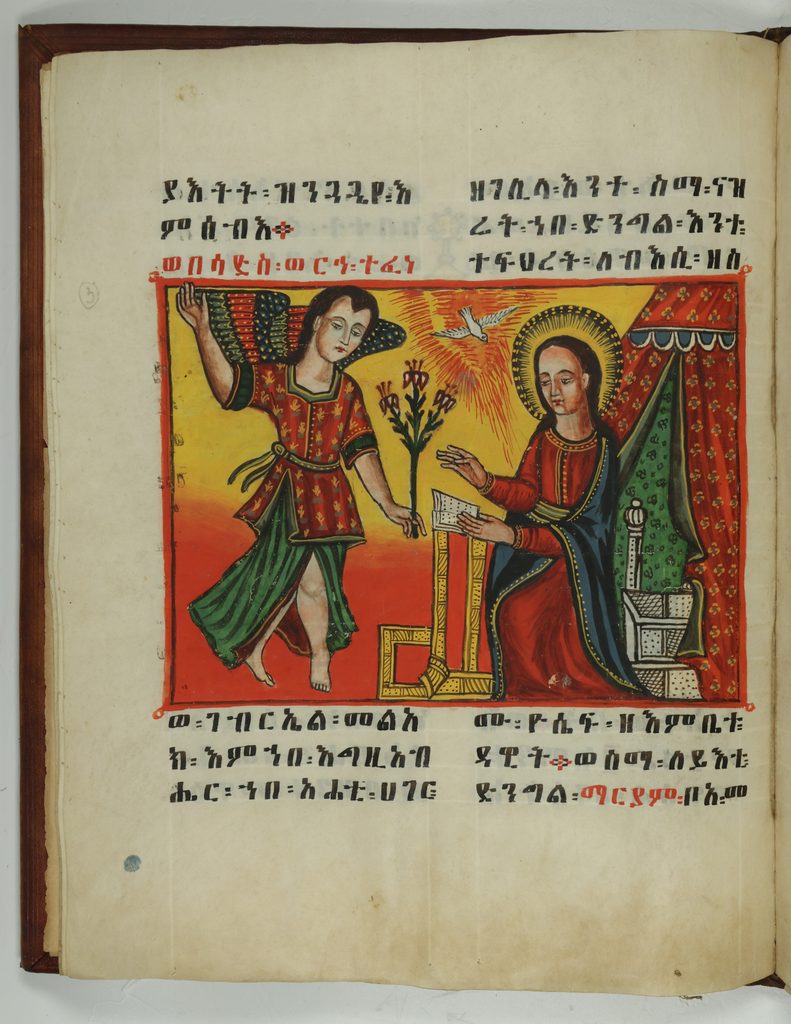

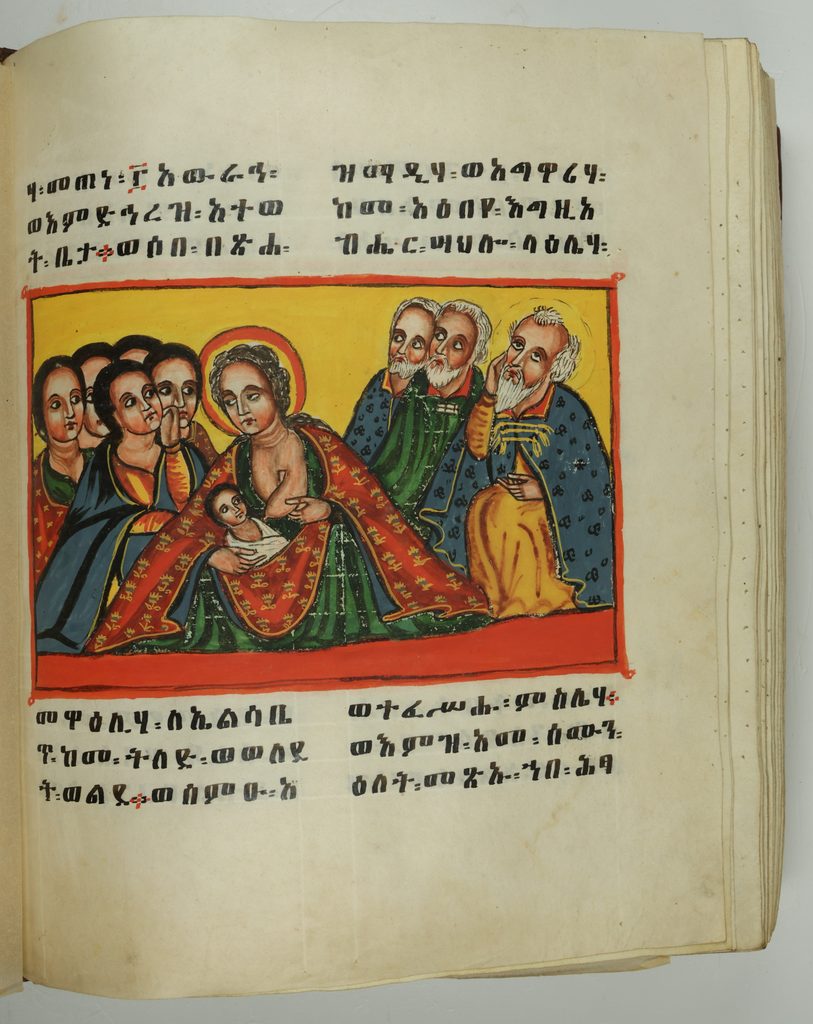

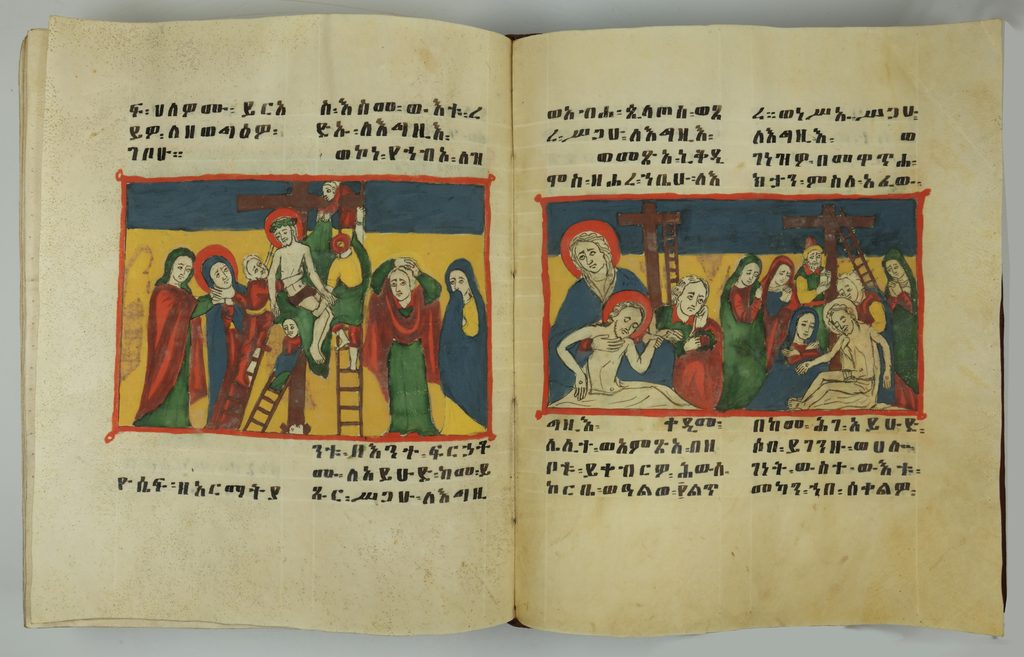
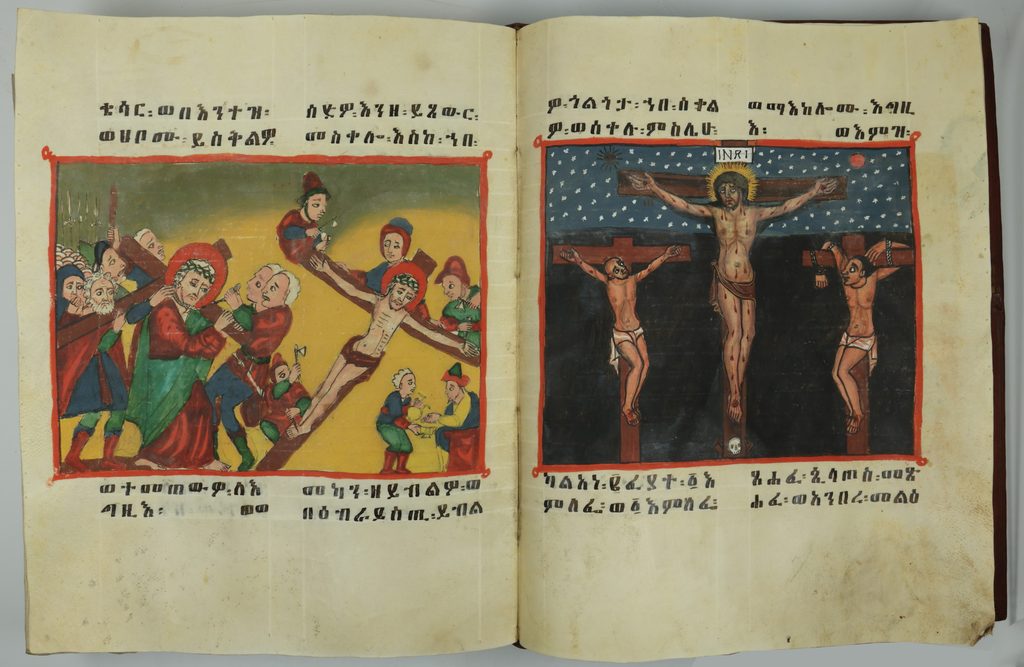
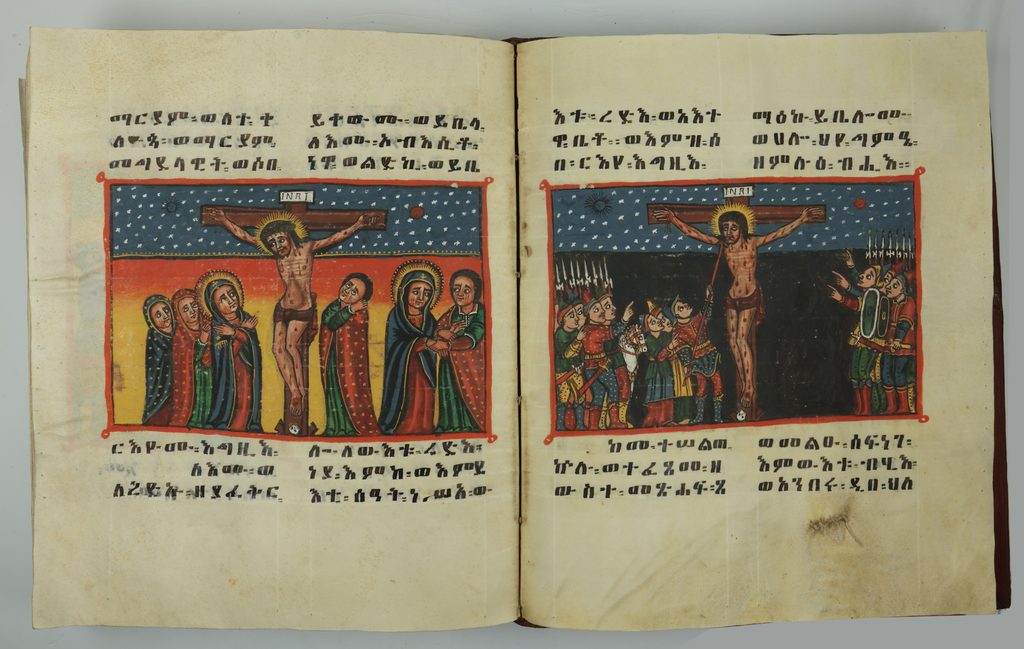
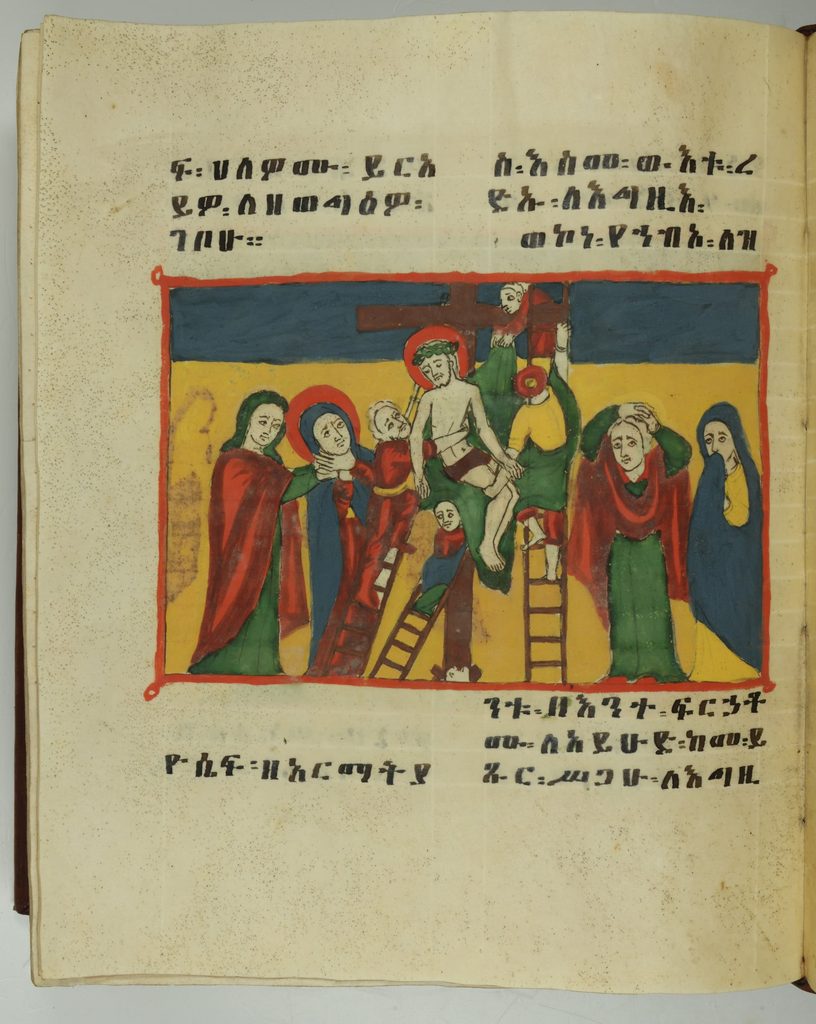
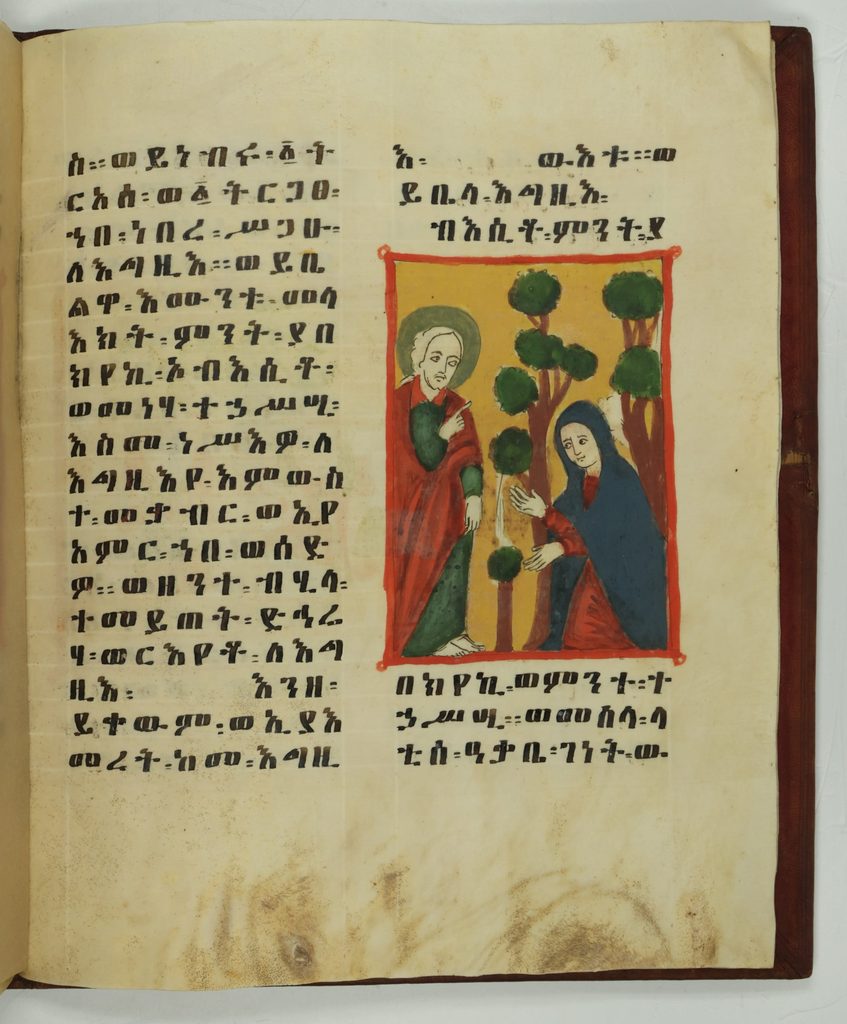
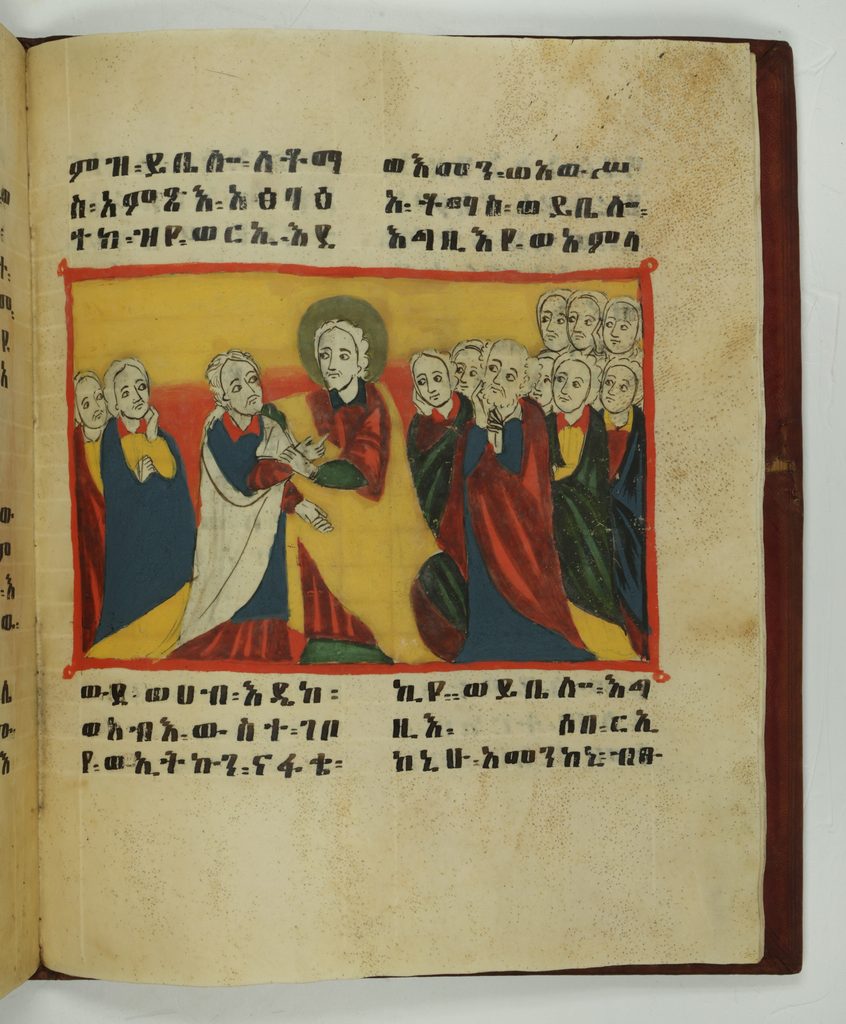
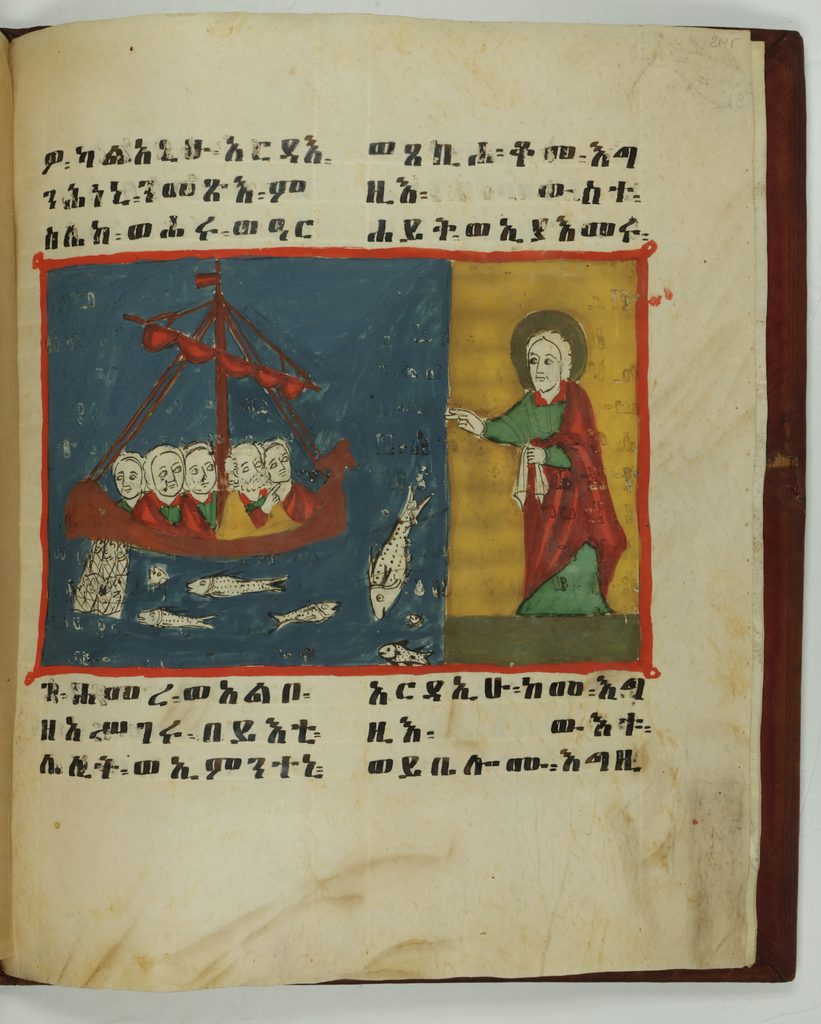
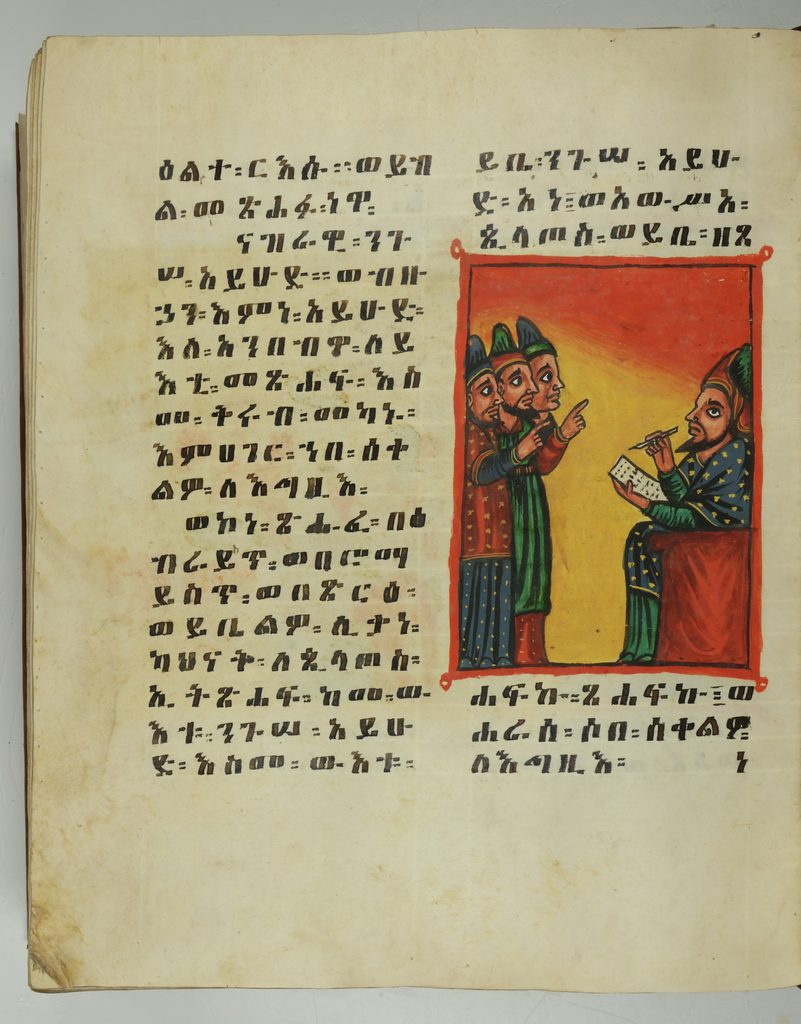
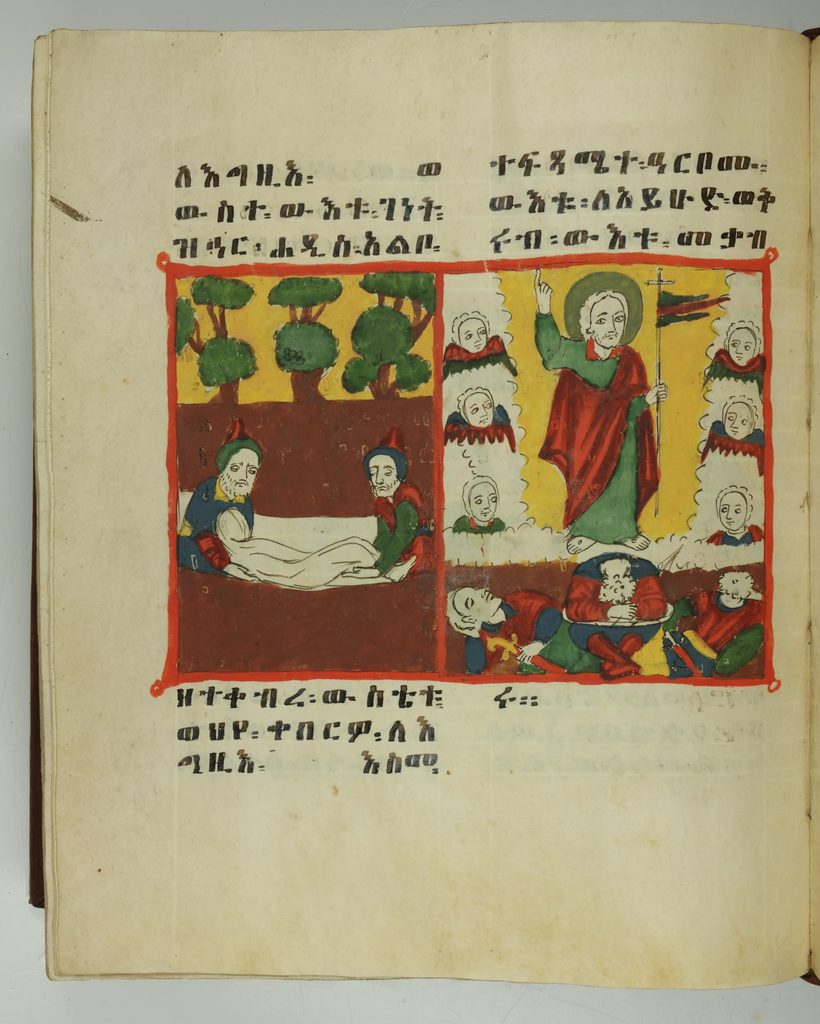
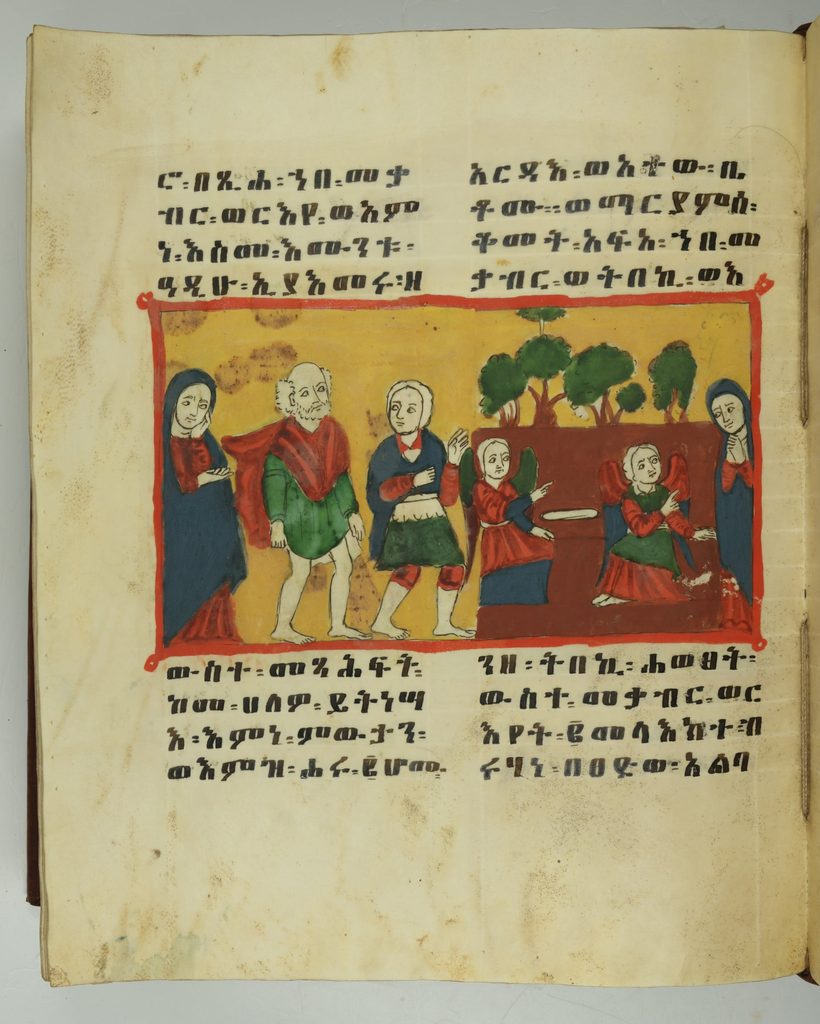
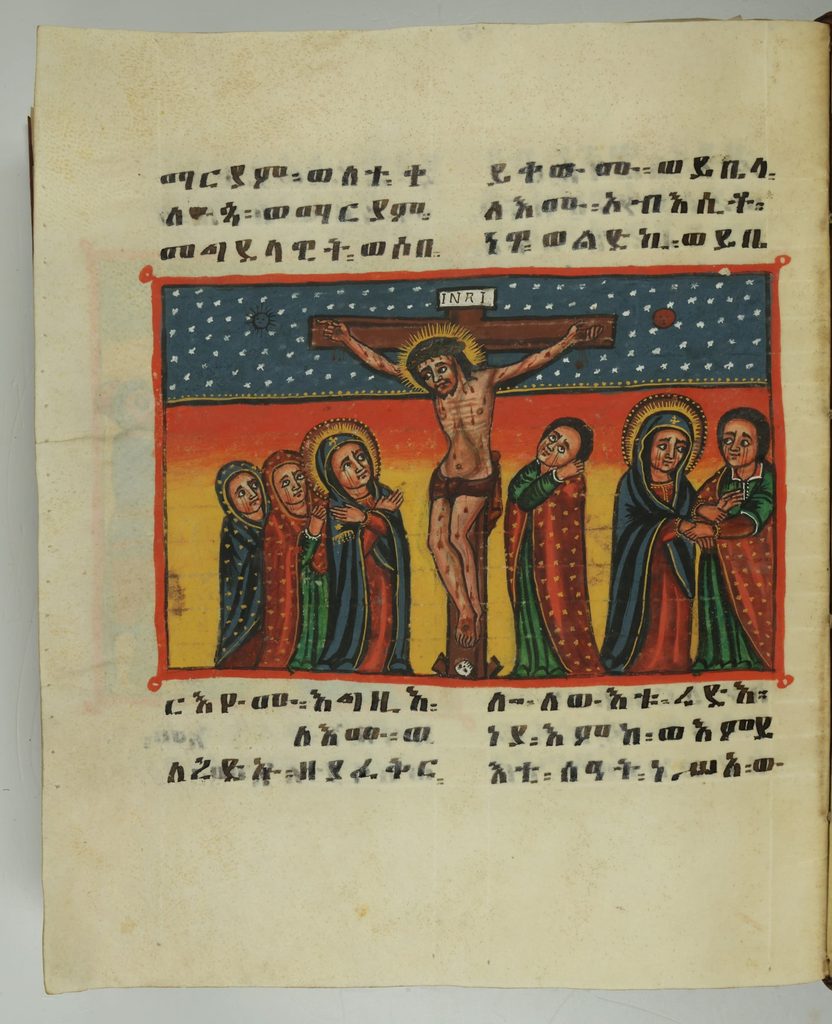

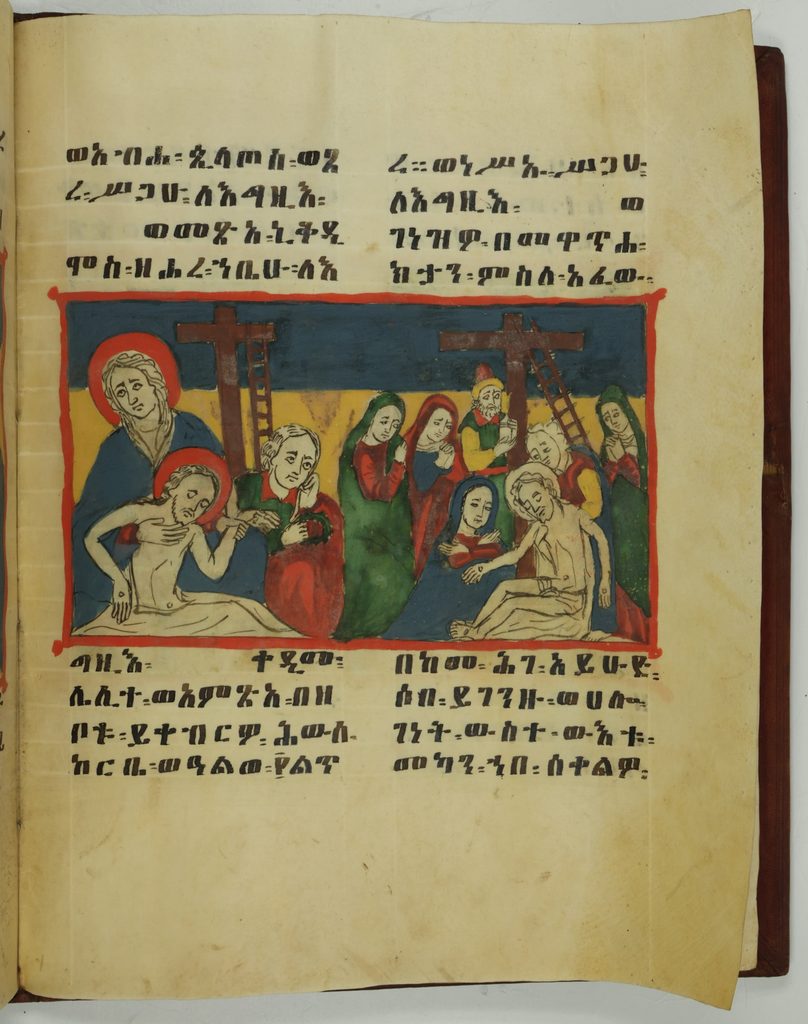
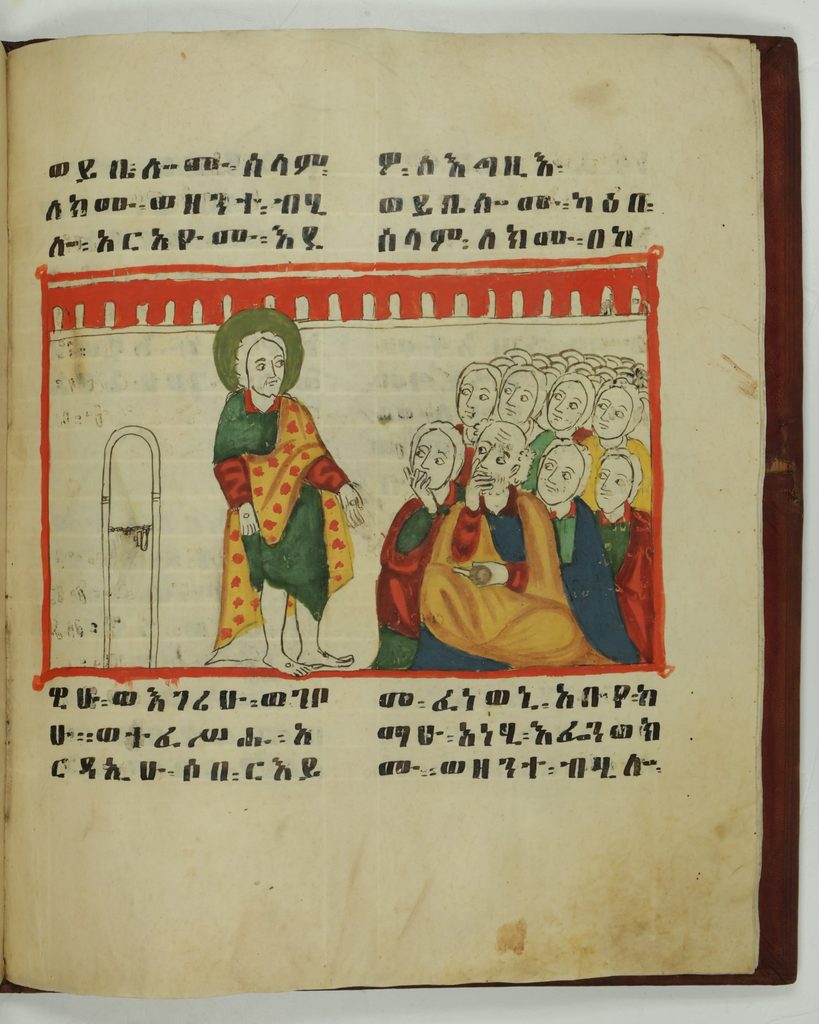


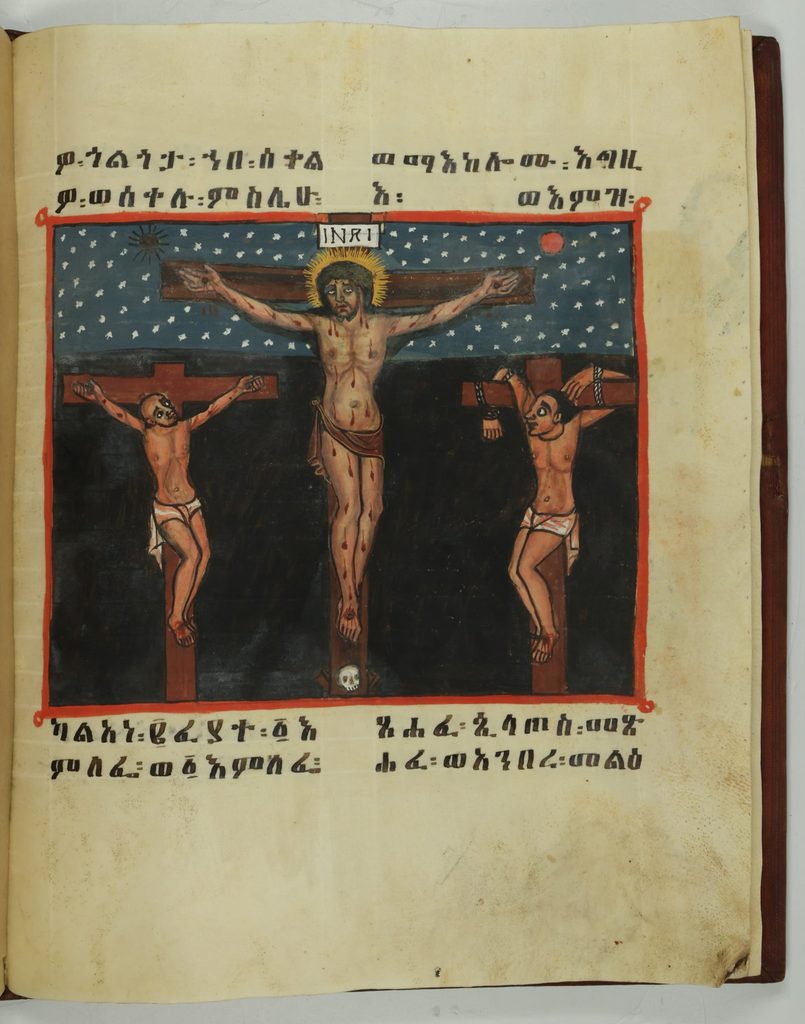
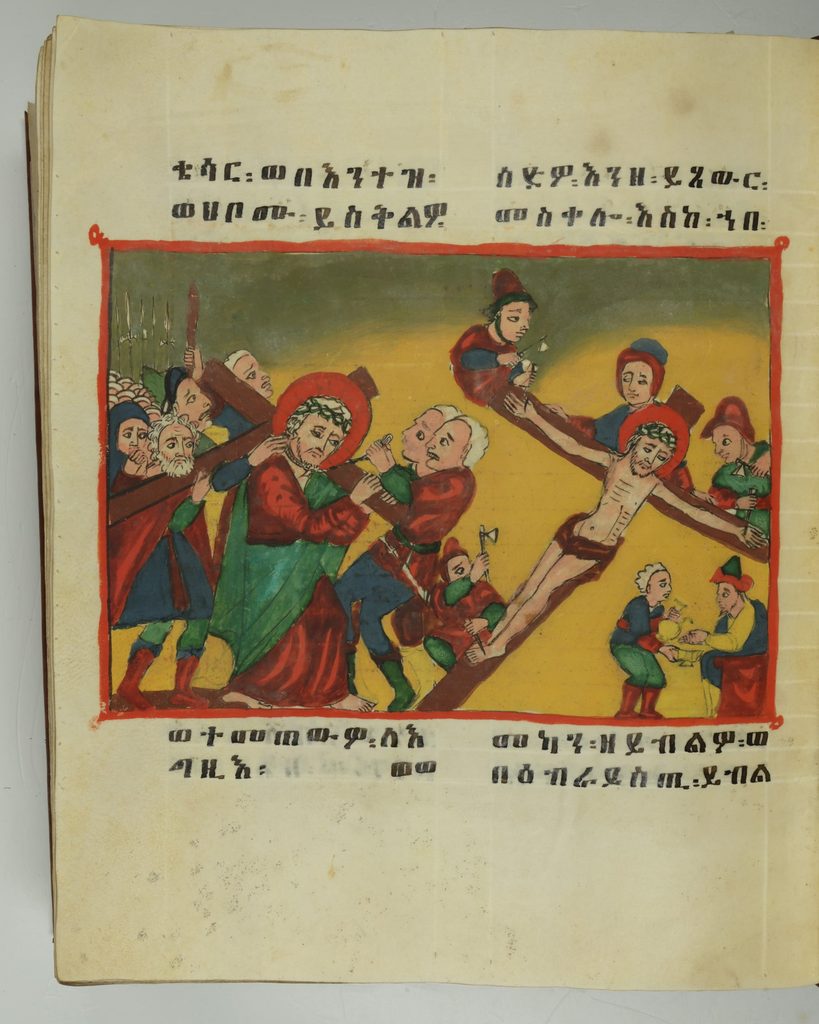
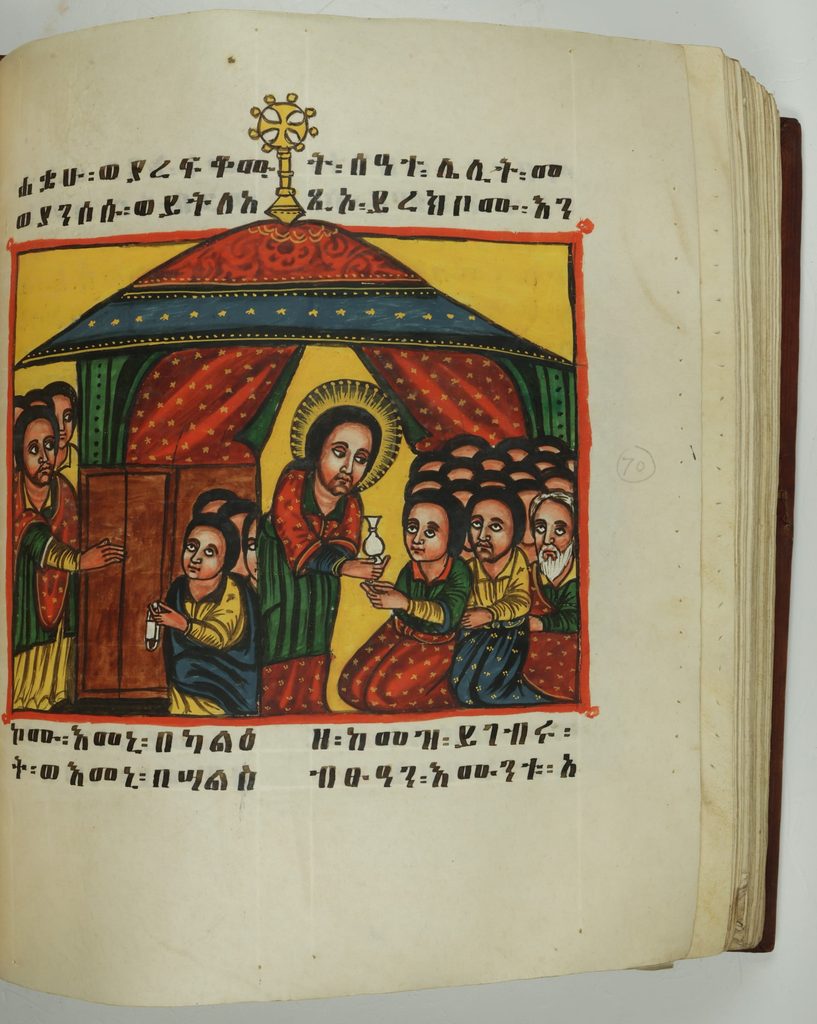
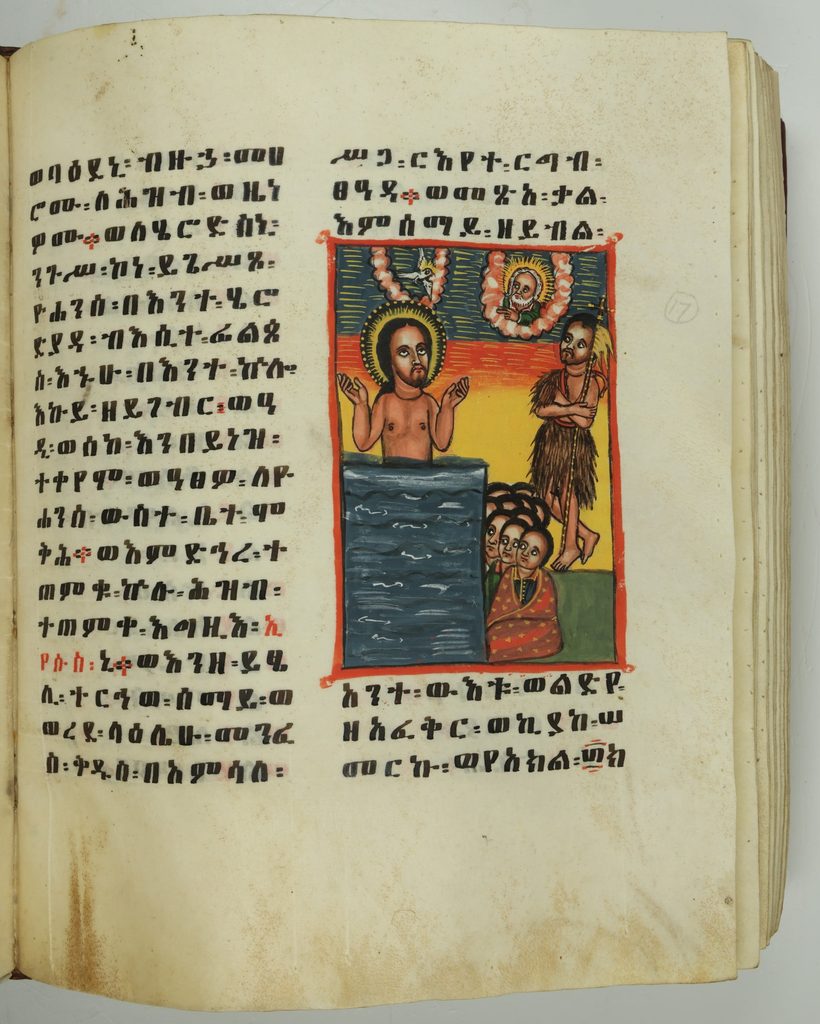
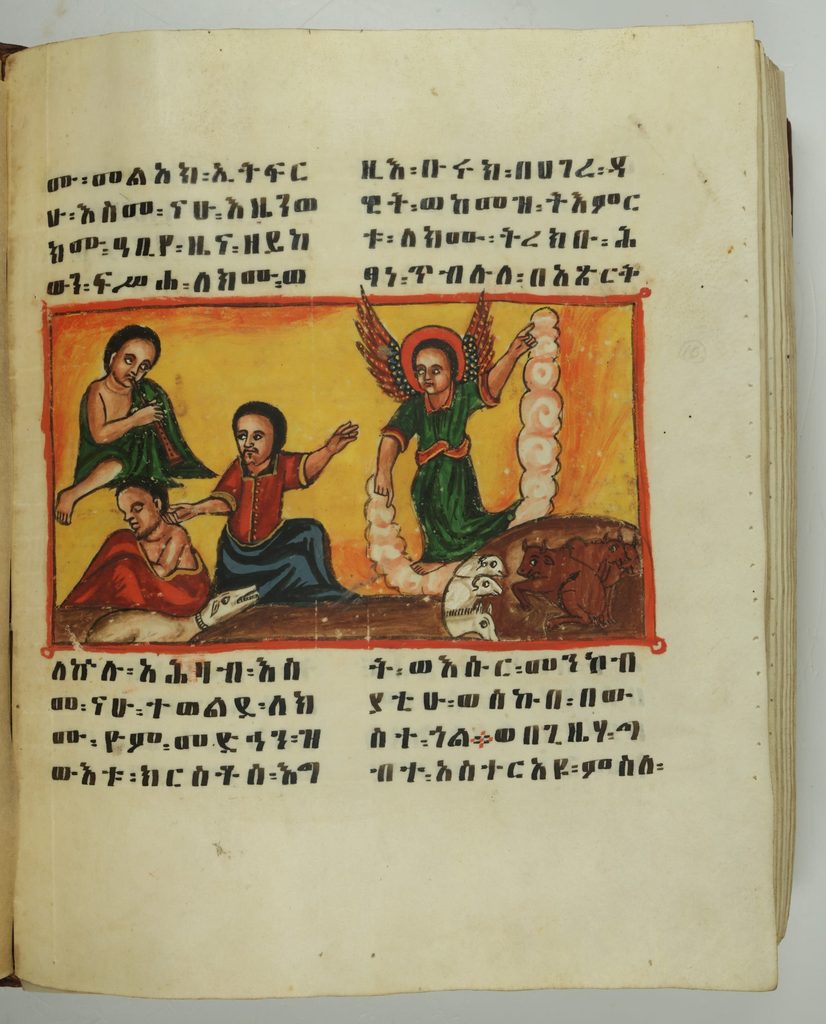

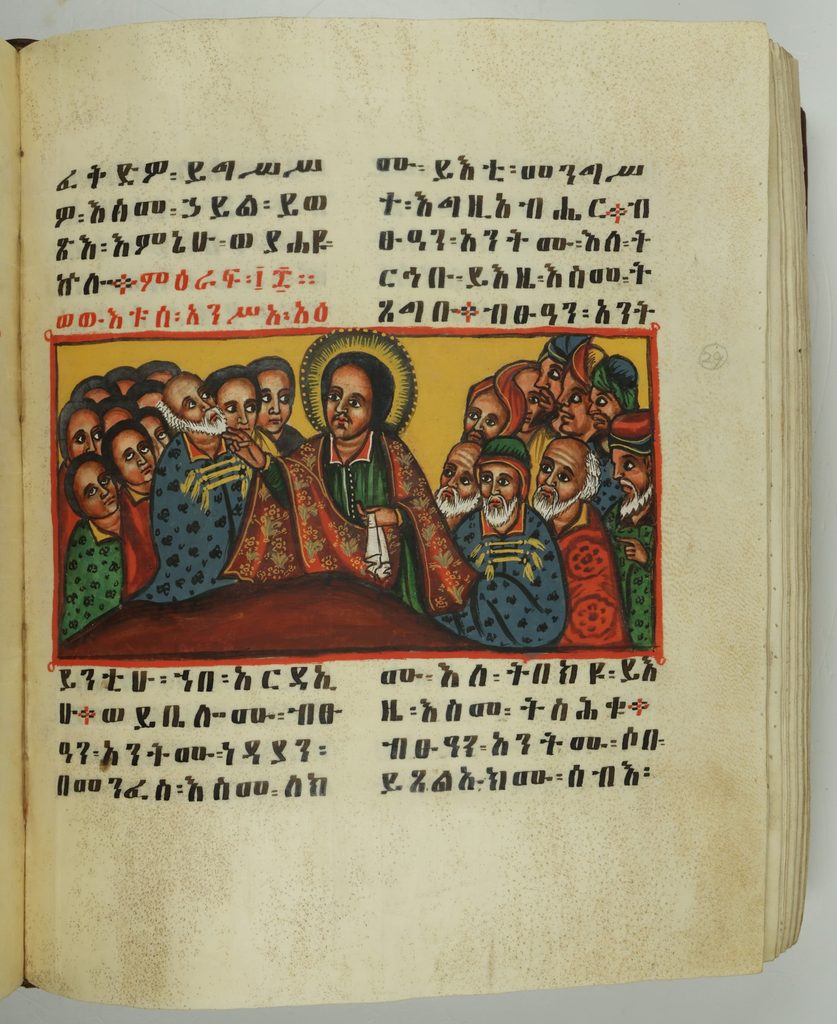
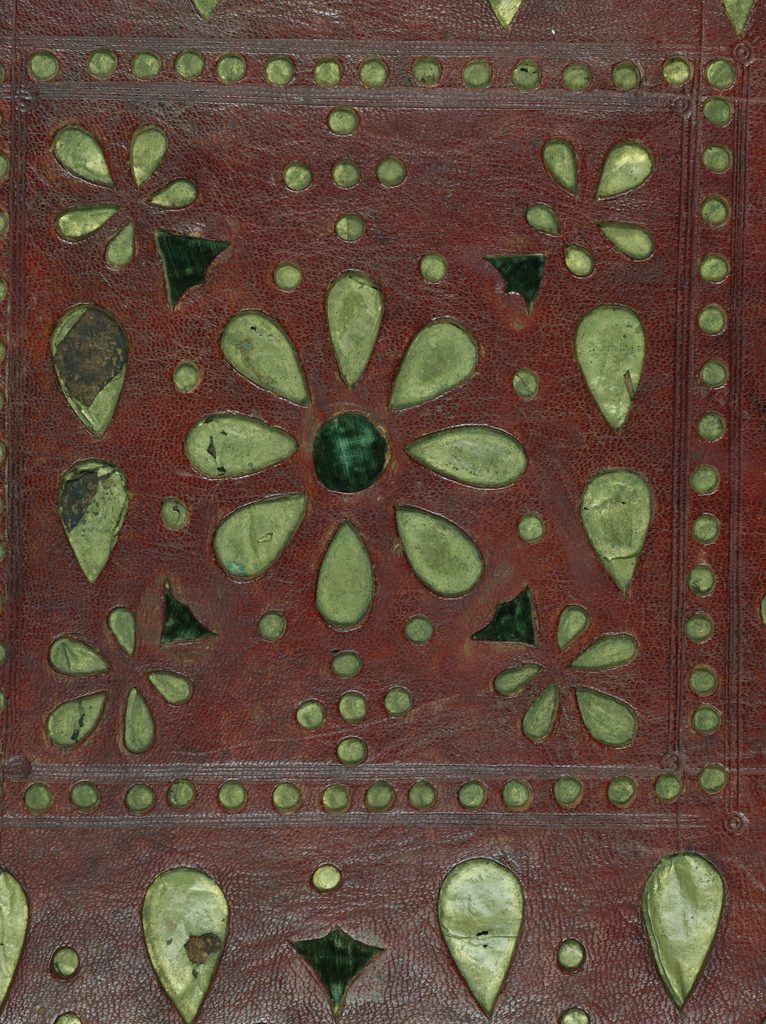

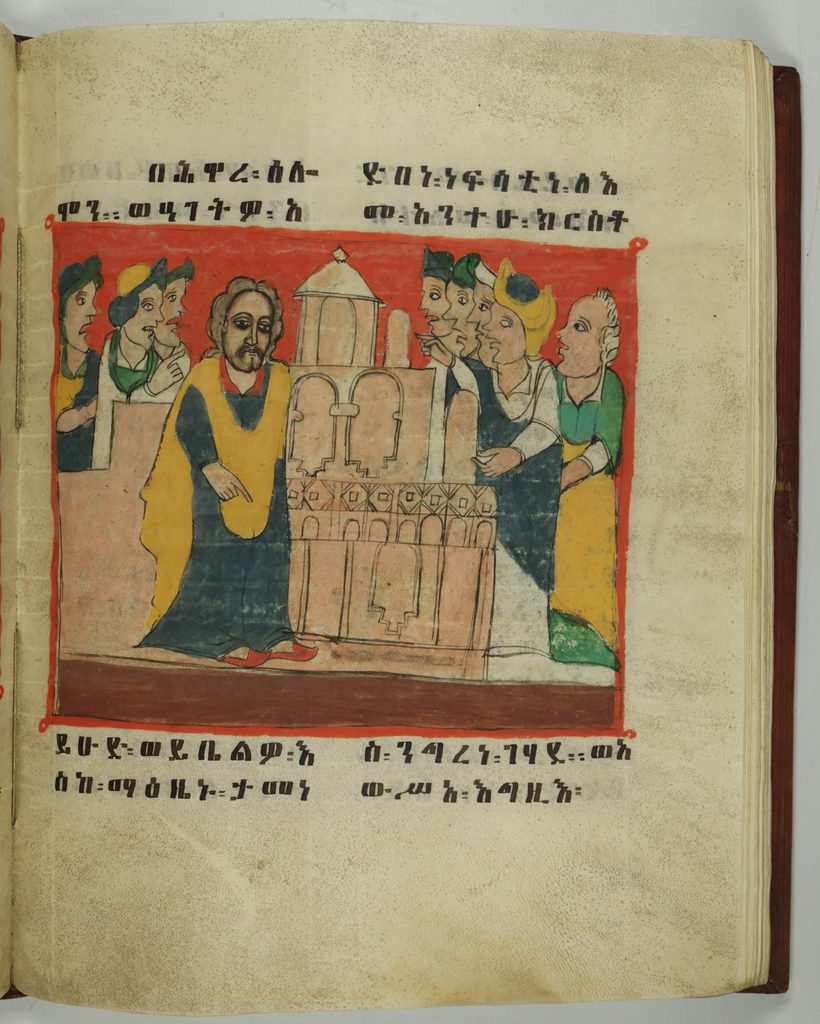
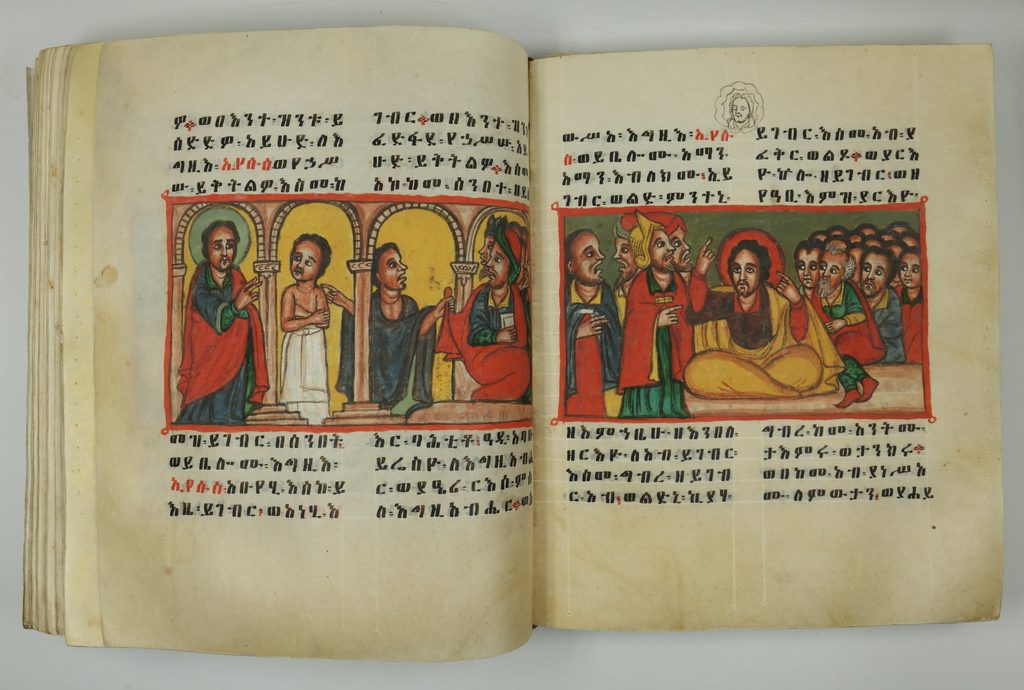
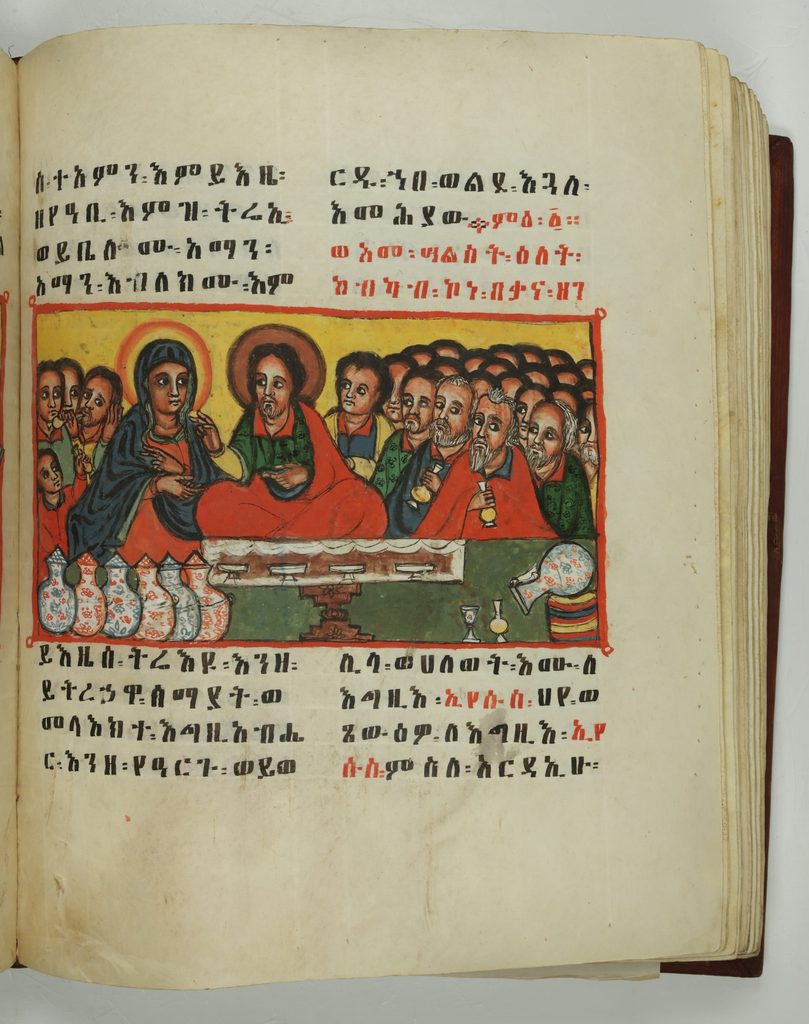
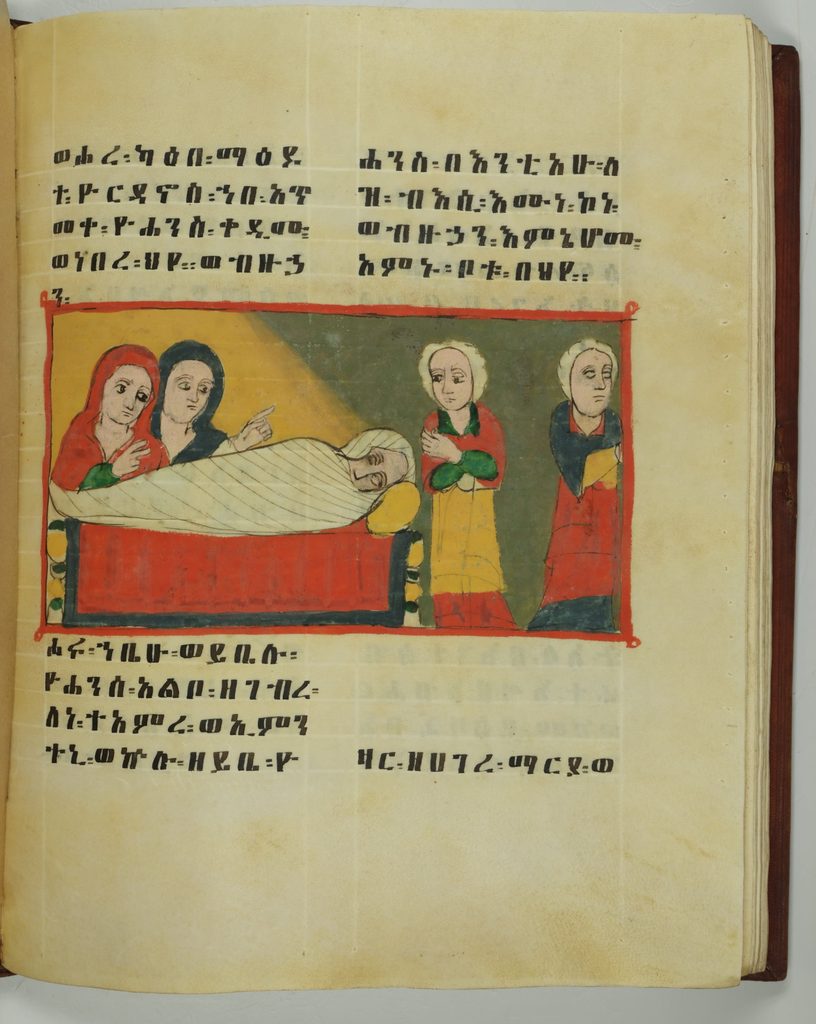
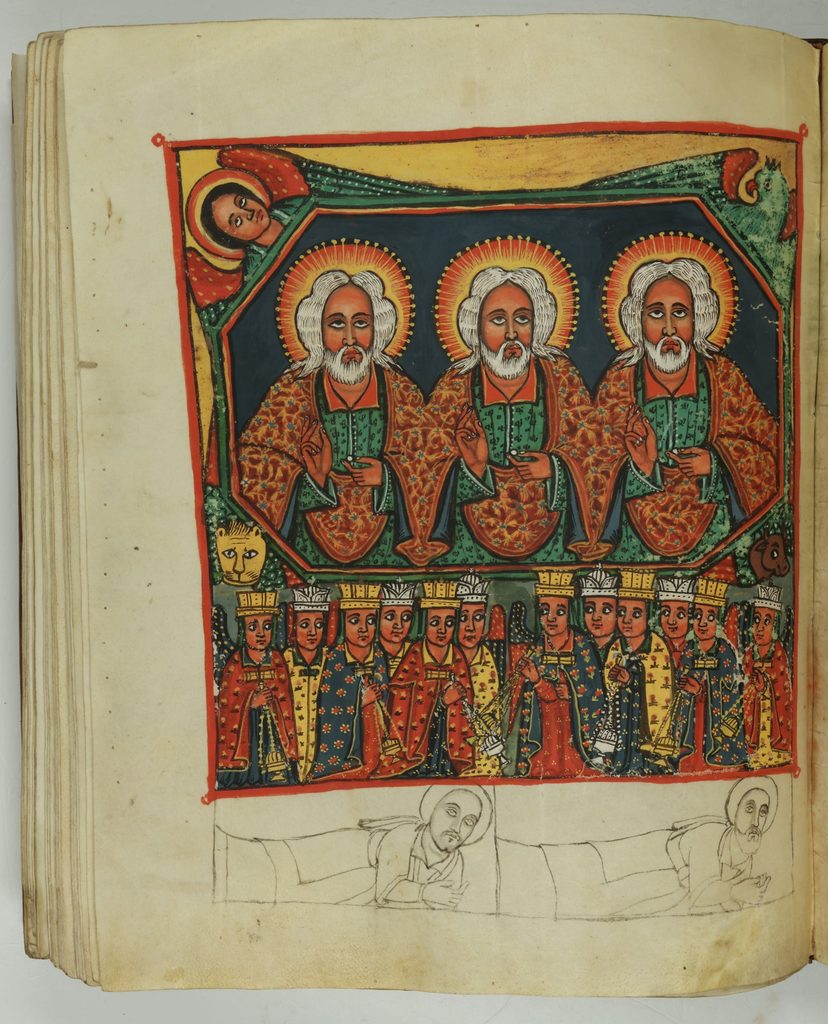
[Biblia aethiopica – NT – Gospel manuscript]. Gospels of St Luke and St John.
Ethiopia, c. 1730-1740.
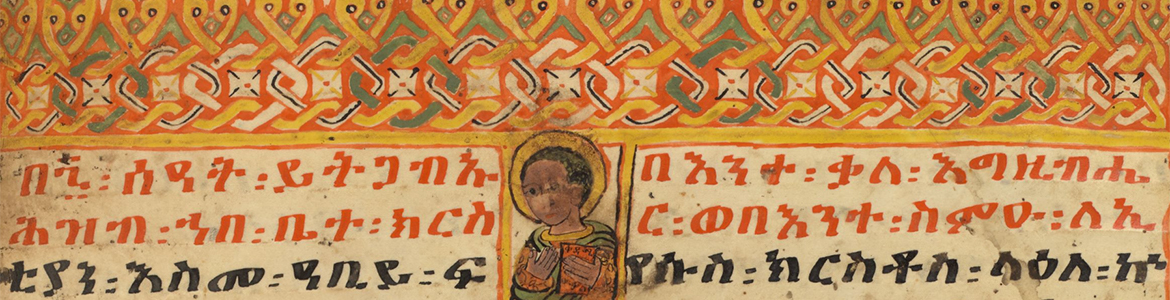
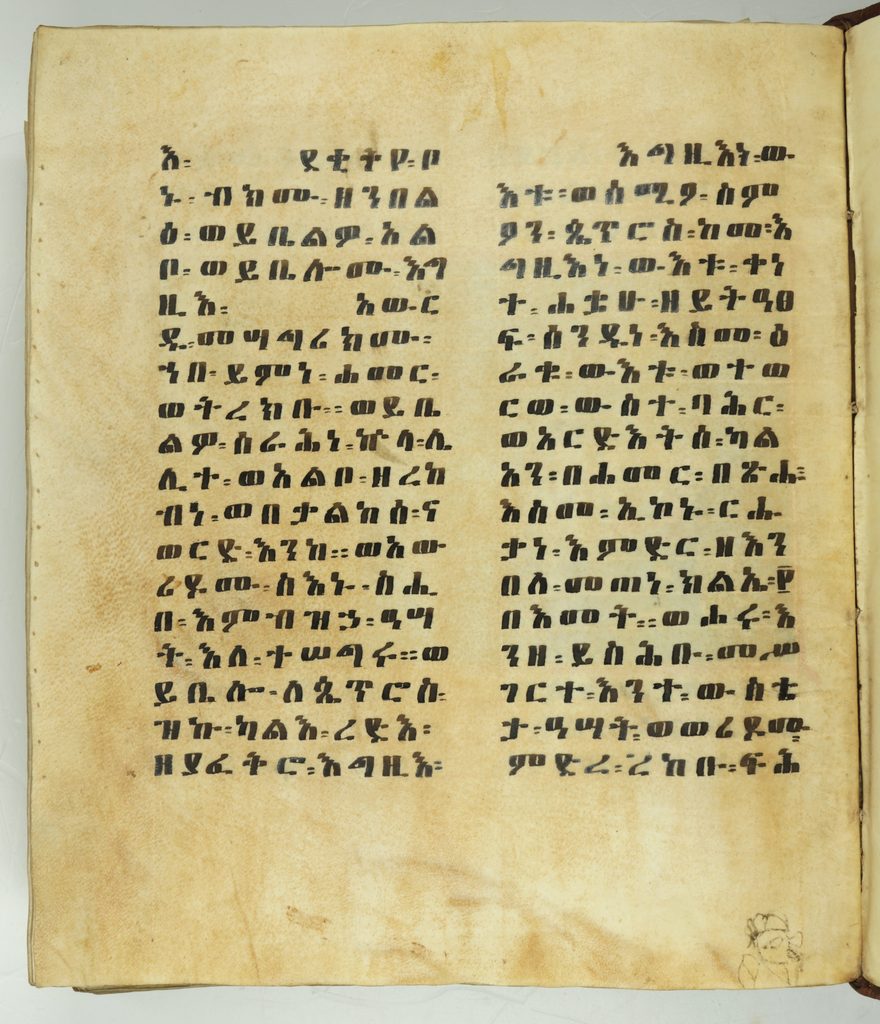
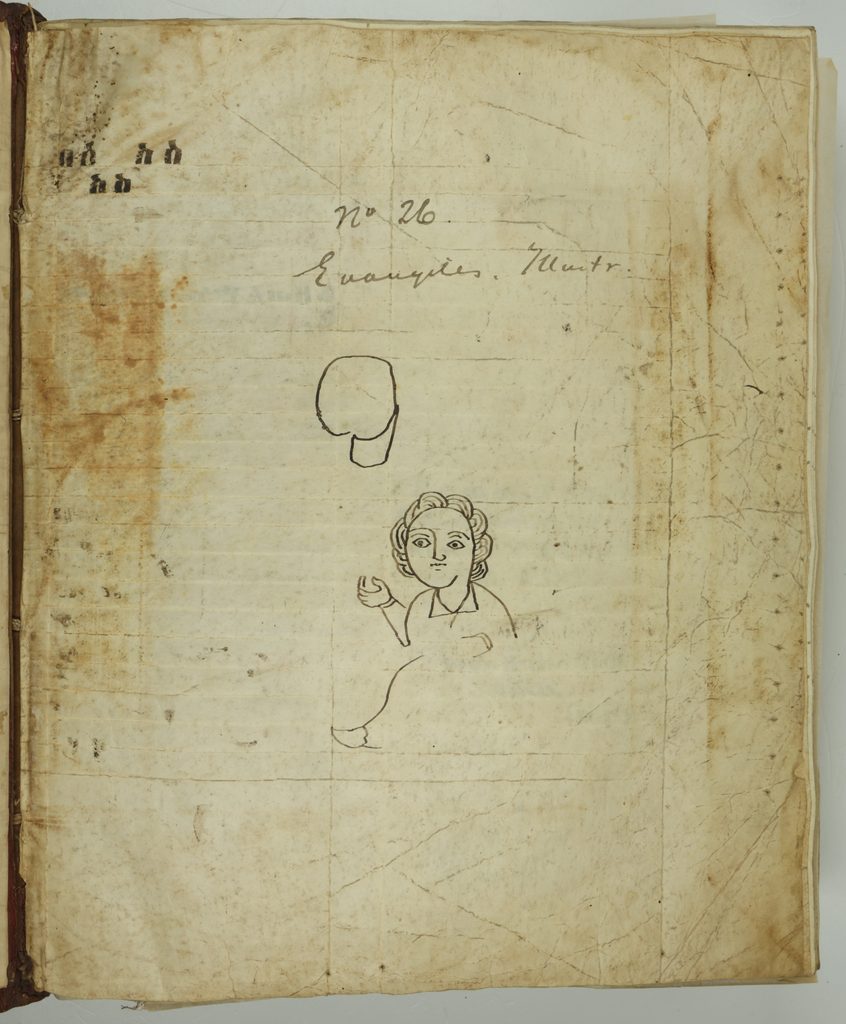
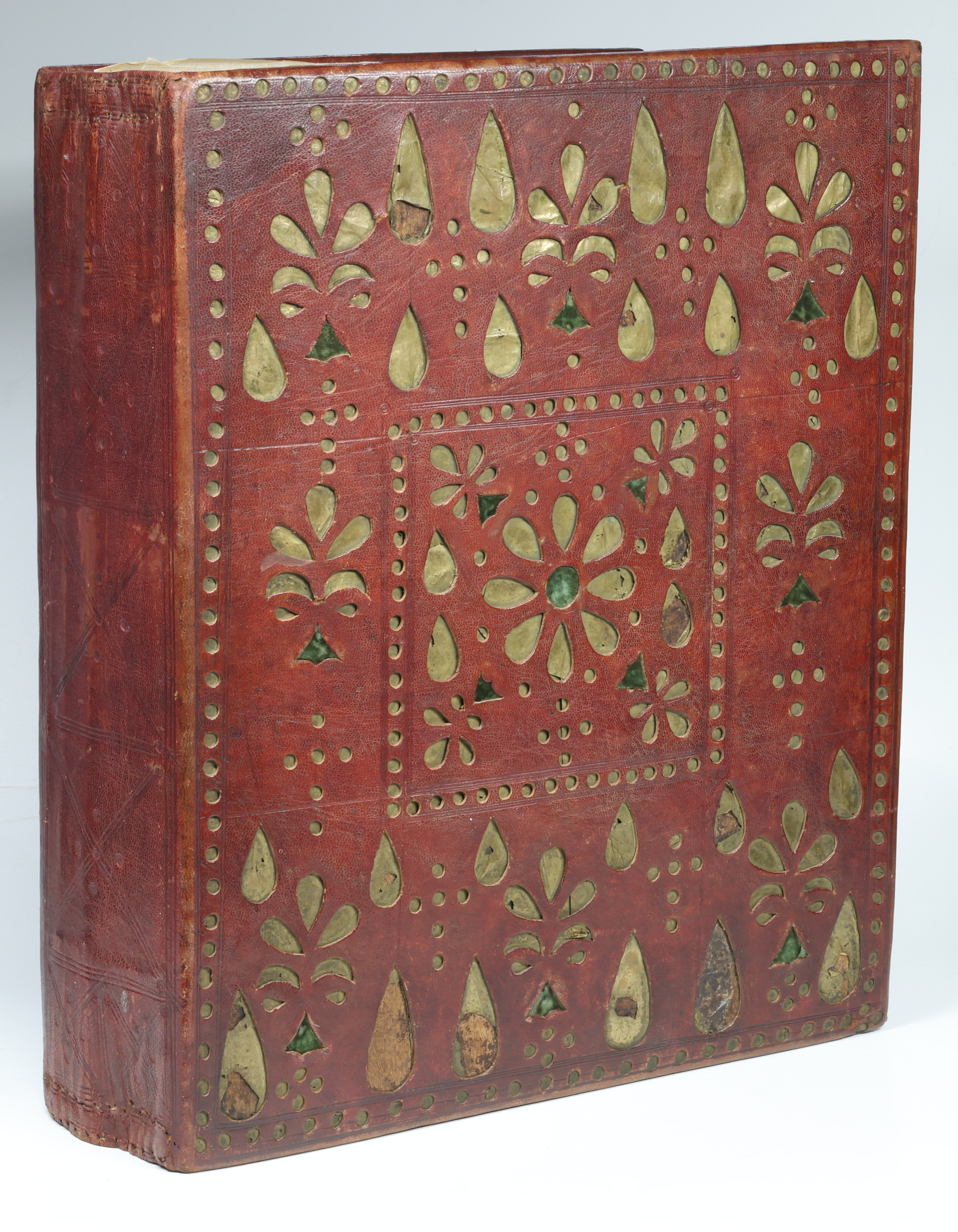
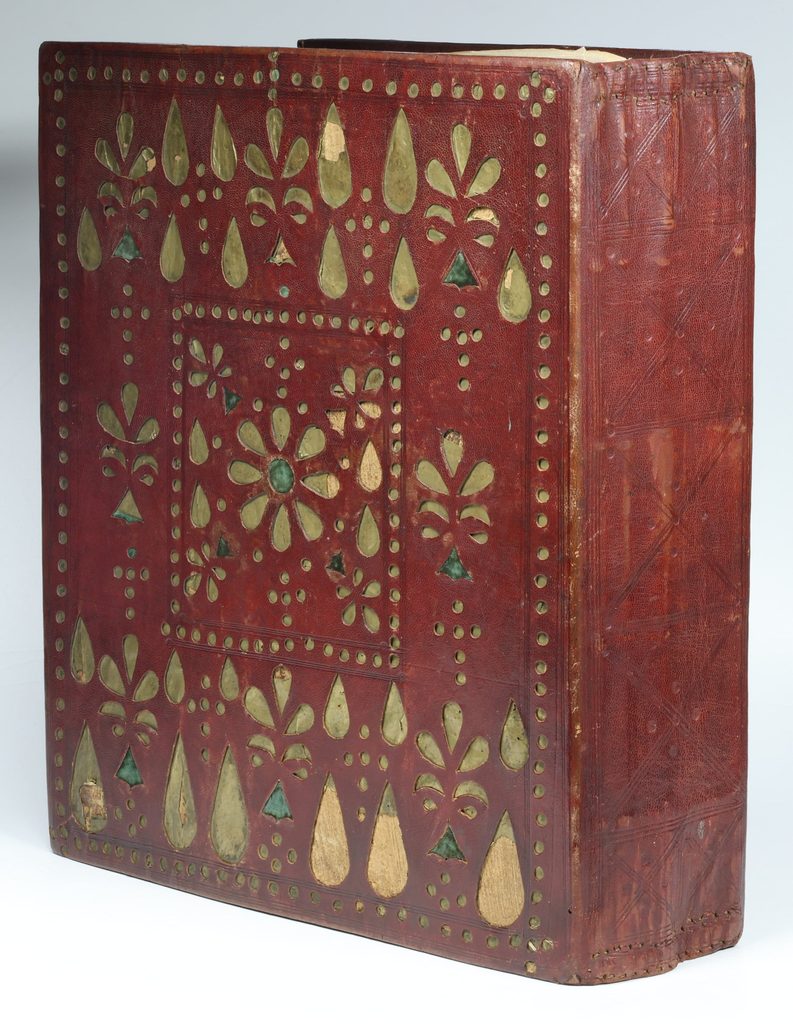
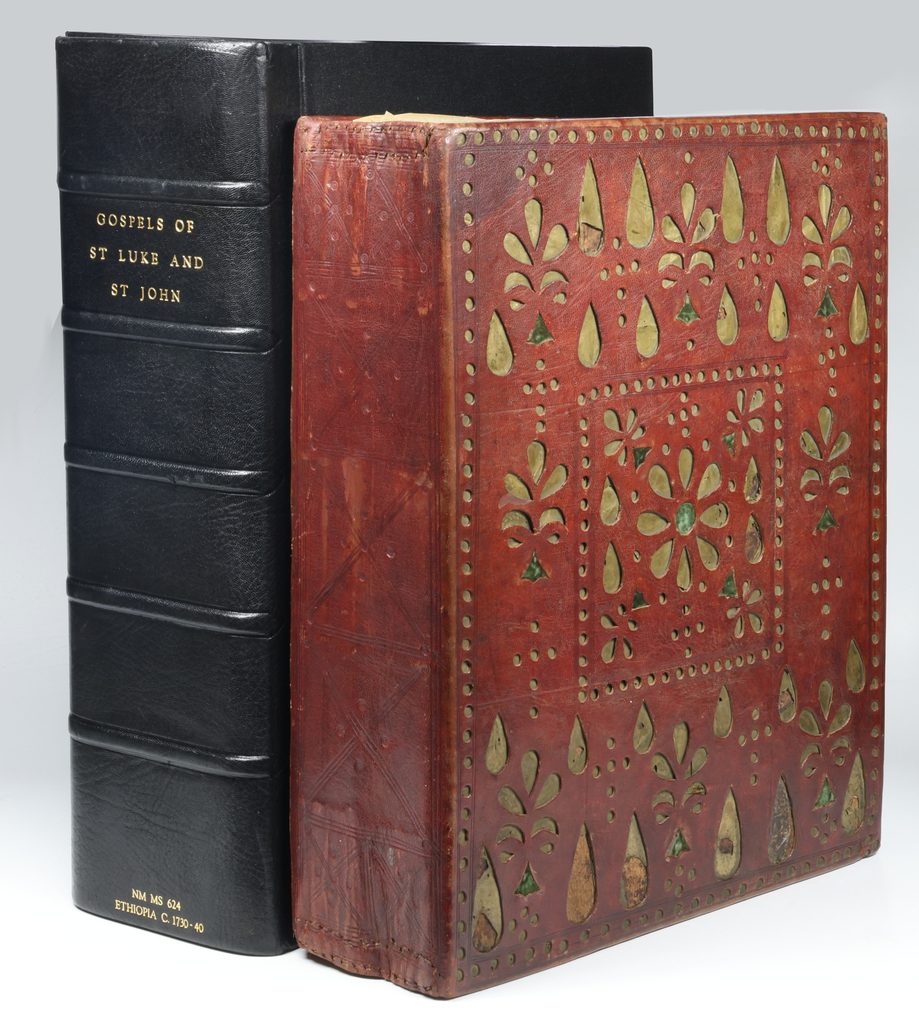
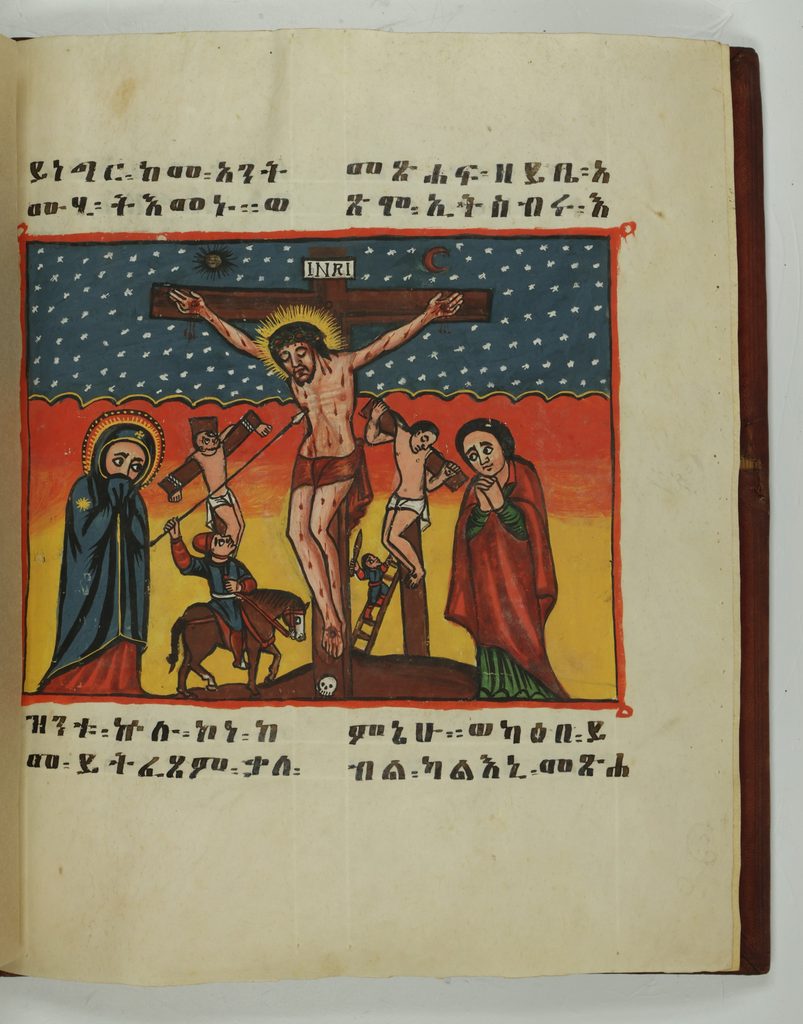
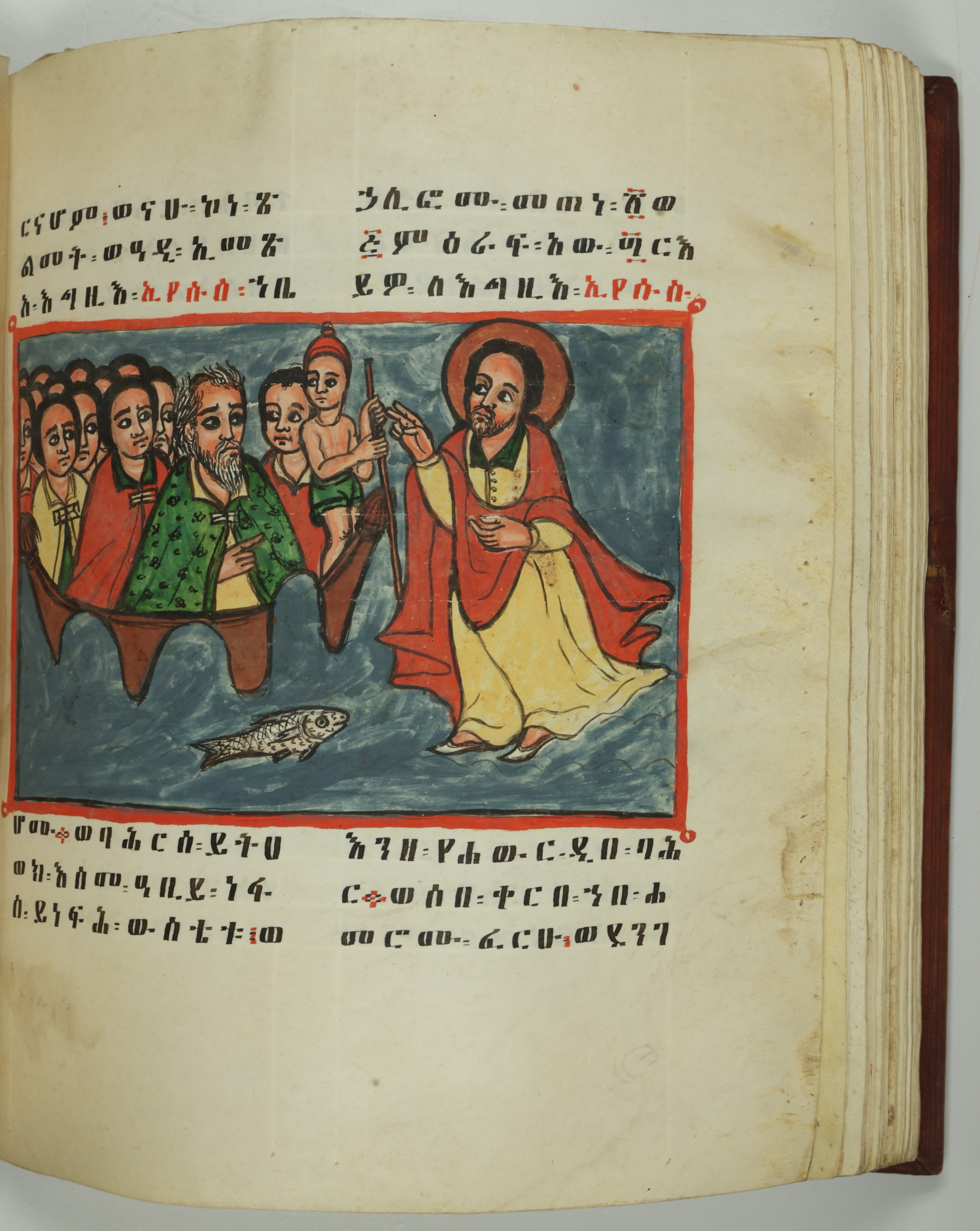
Large folio (295 x 362 mm). Illuminated manuscript on vellum. 218 ff., 2 columns, 18 lines, written in black ink with chapter headings, the first two lines of each chapter, holy names, punctuation marks, and numerals in red. With a total of 235 paintings, including two full-page, 220 half-page, and 13 quarter-page illuminations. Decorated red leather over wooden boards, pierced to reveal gold foil and velvet. Stored in a custom-made black and gilt half morocco case.
A lavishly decorated Gospel Book from the great imperial library of Tewodros II. This large Ethiopian manuscript, written in Ge’ez on vellum circa 1730-1740, preserves the Luke and John half of a celebrated two-volume royal Gospel commission, forming the companion volume to the Gospels of Matthew and Mark now in the Bavarian State Library.
The manuscript contains the full text of the Gospel of Luke and all but the final 16 verses of the Gospel of John, the latter breaking off in the middle of a word before several blank leaves: the evidence suggests a monumental project left unfinished rather than a later loss.
The unprecedented pictorial density makes this volume an authoritative witness to Ethiopian narrative illumination. 235 paintings unfold the infancy narratives, miracles, parables, the Passion, Resurrection, and Johannine episodes, with at least three artists contributing to the programme. The cycle shows the particular vitality of the Second Gondarine period, absorbing Western iconographic motifs in scenes such as the Annunciation, the Crucifixion, and the uncoloured full-page Virgin and Child, while retaining the vivid colour fields, frontal sacred figures, and courtly Ethiopian conventions of Gondar.
The highly unusual binding, apparently original, is itself a defining survival: deep red pierced leather, decorated with scored floral and tear-drop openwork, is backed with thick gold foil and green velvet, with plain blue-green silk panels inside the boards.
Tewodros II (c. 1818-68), Emperor of Ethiopia from 1855 onward, is widely regarded as the first modern ruler of his country. He united much of Ethiopia under imperial authority, strengthened central government, curbed feudal power, and built a new elite based on merit and service. His imperial library at Mäqdäla, comprising some thousand manuscripts, systematically brought together Ethiopia’s written heritage on a scale without precedent. His reforms laid important foundations for the modern Ethiopian state and were carried forward by his successors.
Exhibited at The Indigenous and the Foreign. Art and Architecture of 17th century Ethiopia, School of Oriental and African Studies, Brunei Gallery, London, July-September 2004.
Provenance
1) Originally commissioned at the Royal Court in Gondar for a donor called Jonas.
2) Acquired by Emperor Tewodros II, together with its companion volume, from a church in Gondar.
3) Owned by Robert Cornelis Napier, 1st Baron Napier of Magdala, after the battle of Magdala in 1868.
4) Sir William Robert Seymour Vesey Fitzgerald (1818-85), Governor of Bombay, probably presented by Napier when he was Commander-in-Chief in India.
5) Via Quaritch to the Revd. Rodwell of Hillside, St Leonard’s, c. 1887.
6) The Pitt-Rivers Museum, Farnham, Sussex, deaccessioned in November 1990, via Sam Fogg.
7) Martin Schøyen, with his bookplate on inside of upper cover, his MS 697, ca. Dec 1990 to Jan 2002, deaccessioned to Sam Fogg.
8) The library of Sir Paul Ruddock, London, 2005-2017.
9) Sam Fogg 18635.
10) Private European collection.
Condition
A few paintings unfinished; most illuminations in the later part of John partly finished from fol. 157r onward. The Gospel of John lacks the final 16 verses and breaks off mid-word, followed by blank leaves, suggesting non-completion rather than later removal.
References
Schoyen MS 697. Sam Fogg, Art of Ethiopia (2005). Cf. the companion volume, BSB Munich, Cod. Aeth. 25, published in E. Hammerschmidt & O. A. Jäger, Illuminierte äthiopische Handschriften (Wiesbaden, 1968), pl. 81-87.
Exhibited at the Abu Dhabi Book Fair 2026
Ethiopian Heritage Authority to Inlibris September 14 2026